
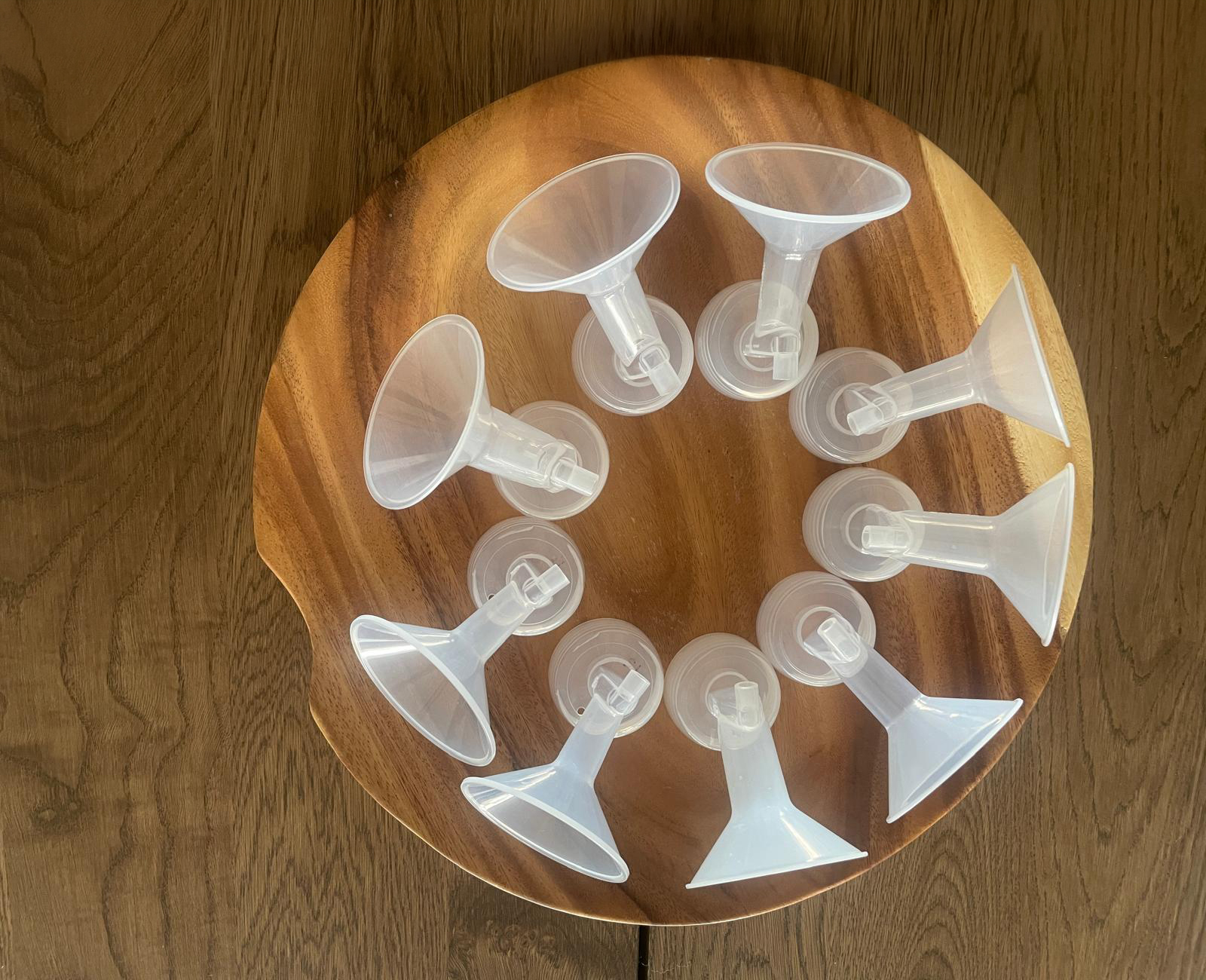
Breast pumping can be an incredibly helpful and sometimes essential part of a feeding journey. Whether you’re returning to work, exclusively pumping, or using a pump to support your breastfeeding goals, comfort and effectiveness matter. One of the most overlooked factors in pumping success is flange fit.
In my work supporting lactating families, I see again and again how a poorly fitting flange can undermine an otherwise good pumping routine. The good news? With the right guidance and fit, pumping can feel significantly more comfortable and efficient.
What Is a Flange and Why Does Fit Matter?
The flange (also called a breast shield) is the funnel-shaped part of the pump that fits over the nipple and areola. Its job is to help draw the nipple into the tunnel comfortably so milk can be removed effectively.
Many pumps come with “standard” sizes often 24mm or 28mm but these sizes do not suit most people. An ill-fitting flange may lead to:
- Pain or pinching during pumping
- Nipple rubbing or blanching
- Swelling or damage to nipple tissue
- Reduced milk output
- Plugged ducts or breast discomfort
A well-fitted flange, on the other hand, allows the nipple to move freely, minimizes unnecessary areola pull, and supports effective milk removal without pain.
Comfort is not a bonus; it’s a key part of milk flow.
A More Individualized Approach: Jeanette Mesite Frem & the Flange FITS™ Guide
Much of what we now understand about effective flange sizing comes from the work of Jeanette Mesite Frem, MHS, IBCLC, creator of the Flange FITS™ Guide. Her research challenged long-standing assumptions about flange sizing, particularly the idea that everyone should automatically size up several millimetres from their nipple measurement.
Research comparing traditional sizing methods with the Flange FITS™ approach found that smaller, more individualized flange sizes often resulted in greater comfort and comparable or improved milk output. This work reinforces what many lactation professionals see clinically: optimal flange fit is personal, dynamic, and not “one size fits all.”
The Flange FITS™ Guide encourages starting closer to the natural nipple diameter and prioritizing real-time comfort, tissue response, and milk removal, rather than relying solely on static charts.
A Practical Flange Fit Guide
1. Measure the Nipple Tip
Measure the diameter of the nipple at the tip, not the base, and not including the areola. Measuring after gentle stimulation can help ensure accuracy.
2. Start Close to Your Measurement
Rather than automatically adding several millimetres, begin with sizes close to your actual nipple diameter. Many people are surprised to find that a smaller size feels far more comfortable and effective.
3. Trial Sizes While Pumping
Flange fit can’t be fully assessed without pumping. When testing a flange:
- The nipple should stay centered
- Only a small amount of areola should be drawn in
- Movement should be smooth, not forceful
- There should be no pain, pinching, or whitening
- Milk flow should be steady, and breasts should feel softer afterward
4. Reassess Over Time
Nipple size and tissue response can change throughout lactation, especially in the early weeks or with changes in pumping frequency. Re-evaluating fit is often helpful if discomfort or reduced output appears.
How I Support Clients with Flange Sizing
While online guides are a helpful starting point, flange fitting is best done with observation, experience, and individualized support. As a lactation consultant, I assess not just measurements, but how your body responds during actual pumping.
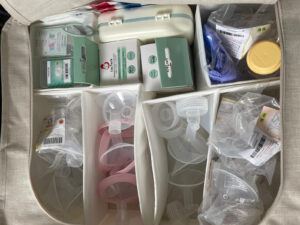
When I work with clients, I:
- Observe nipple movement and tissue response in real time
- Assess comfort, milk flow, and breast drainage
- Identify issues such as elastic tissue, swelling, or friction
- Adjust pump settings alongside flange fit
- Support ongoing changes as your body and feeding needs evolve
Importantly, I have a range of different flange types and sizes available for clients to try during consultations. This includes:
- Multiple diameters
- Different tunnel lengths and shapes
- Soft silicone and rigid flanges
- Traditional and newer ergonomic designs
Being able to try different flanges, rather than guessing or repeatedly purchasing often leads to faster resolution of pain, improved milk output, and increased confidence with pumping.
I offer individualized flange fitting support through in-person lactation visits.
Final Thoughts
Flange fit plays a far greater role in pumping success than most people realize. Drawing on evidence-based tools such as Jeanette Mesite Frem’s Flange FITS™ Guide, and combining them with clinical experience, allows us to move beyond default sizing and truly tailor pumping support to each individual.
If pumping has been uncomfortable, inefficient, or frustrating, the solution may not be a new pump — it may simply be the right fit.
If you’d like support with flange sizing or pumping comfort, I’d be happy to help.